Data integrity · Provenance · SHA-256
Why Every Reading on Truth Observatory Is Hashed
Every record we collect gets a SHA-256 fingerprint, and once an hour those fingerprints are sealed and anchored. Here is what that proves, what it does not, and how anyone can check it.
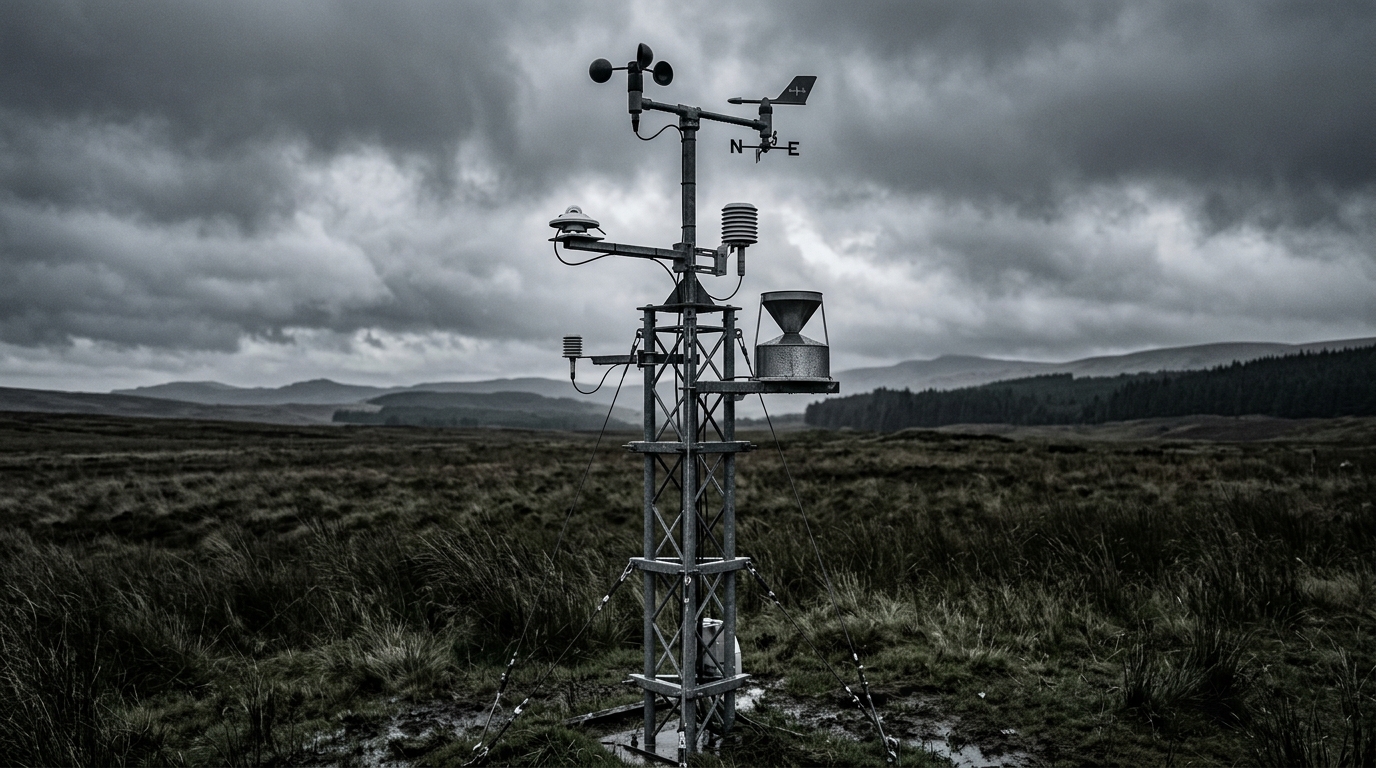
Public data has a quiet problem. Numbers get revised, pages get updated, files get replaced, and most of the time nobody can tell what a figure said last week. If you want to point at a reading and say "this is what the instrument recorded at 3:00 that afternoon," you need a way to prove it.
That is why every record on Truth Observatory is hashed.
What a hash is, in one minute
A hash is a fingerprint for data. You feed in any amount of text, and a hash function like SHA-256 gives back a fixed 64-character code.
Two properties make it useful:
- The same input always gives the same fingerprint. Anyone, anywhere, can recompute it.
- Change one character and the fingerprint changes completely. There is no practical way to edit the data and keep the same hash.
So if you have a record and its hash from the day it was collected, you can tell whether the record has been touched since.
What we do with every reading
- Collect. Each collector pulls from its public source (NOAA, USGS, FAA, EPA, EIA and others) on a fixed schedule.
- Store unchanged. The record is written as it came in, with the source and the time we retrieved it.
- Fingerprint. Each record is hashed with SHA-256.
- Seal every hour. Once an hour, the new fingerprints for each feed are combined into a single Merkle root, a hash of hashes. The roots of all feeds are combined again into one top root.
- Anchor. That top root is written to the TrustLayer chain. After that, nobody, including us, can quietly change an earlier hour's records without the math showing it.
The receipts for every hour are public and free at /api/anchors.
What this proves, and what it does not
Being honest about the limits matters as much as the feature itself.
It proves:
- A record has not been changed since the hour it was sealed.
- The record existed at that time, in that exact form.
It does not prove:
- That the source was right. If an instrument was miscalibrated or an agency published an error, the hash faithfully preserves the error. That is the point: we keep what was published, not what we wish it said.
- That every reading an agency ever made is here. If a source was down or a collector missed a cycle, there is a gap. We show gaps as gaps rather than filling them in.
How to check it yourself
You do not have to trust us. The method is published step by step in the Verify the data section of our research data documentation. In short:
- Download a feed's sealed archive for a day (a subscriber feature).
- Get the matching hourly receipt from
/api/anchors. - Hash each record line with SHA-256 and fold the hashes together the way the docs describe.
- Your result must match the root in the receipt, and that root must match the one recorded on the chain.
There is a short Python example in the docs that does the folding in about ten lines.
Why this matters to you
Most people will never run the check, and that is fine. The point is that anyone can. A journalist, a researcher, a skeptic or a neighbor can take a number from this site and prove it was not changed after the fact. That is a different kind of trust than "take our word for it."
The system watches. The data decides. The hash keeps it honest.